Essence of Jainism
Live & Let Live
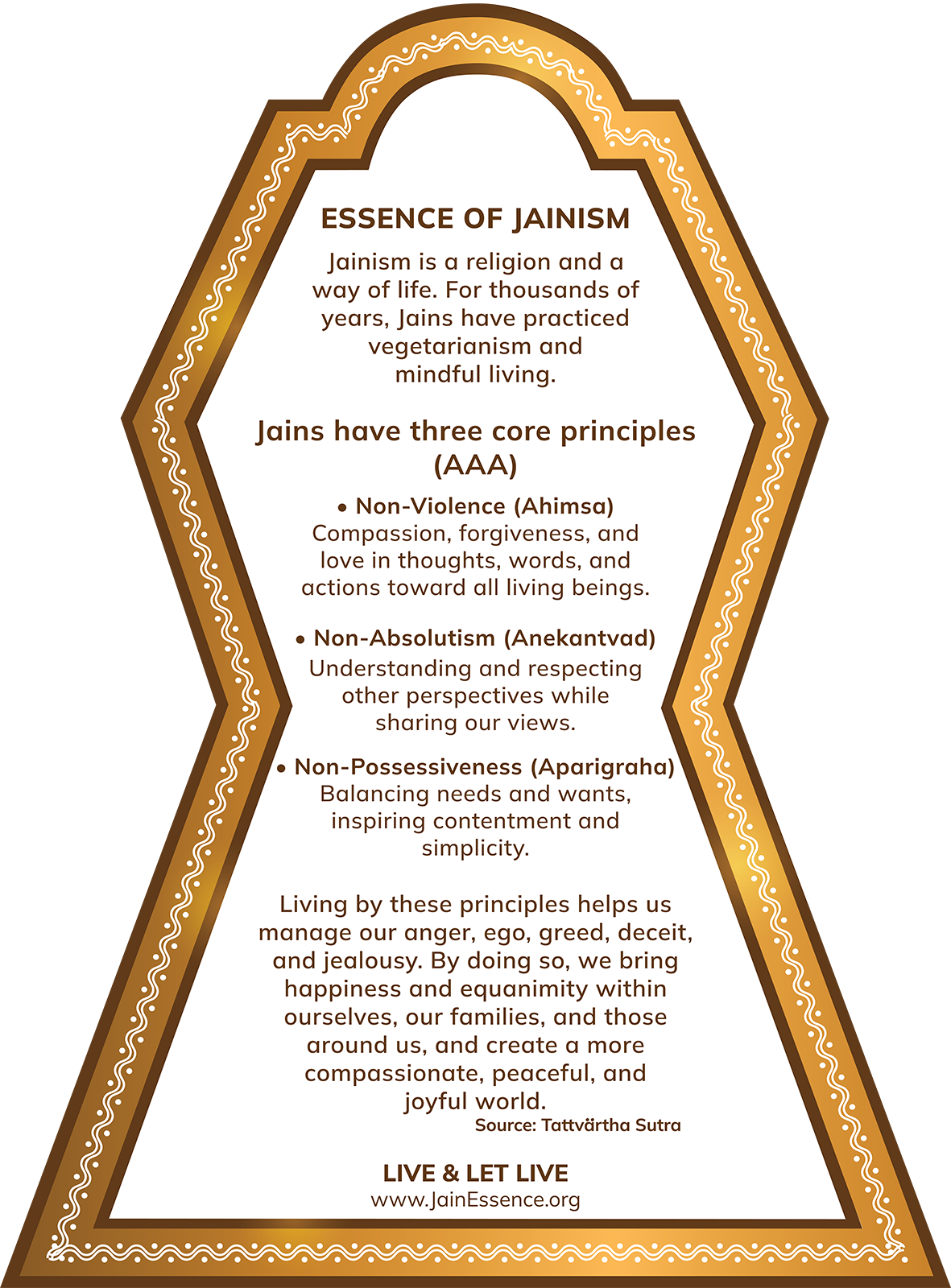
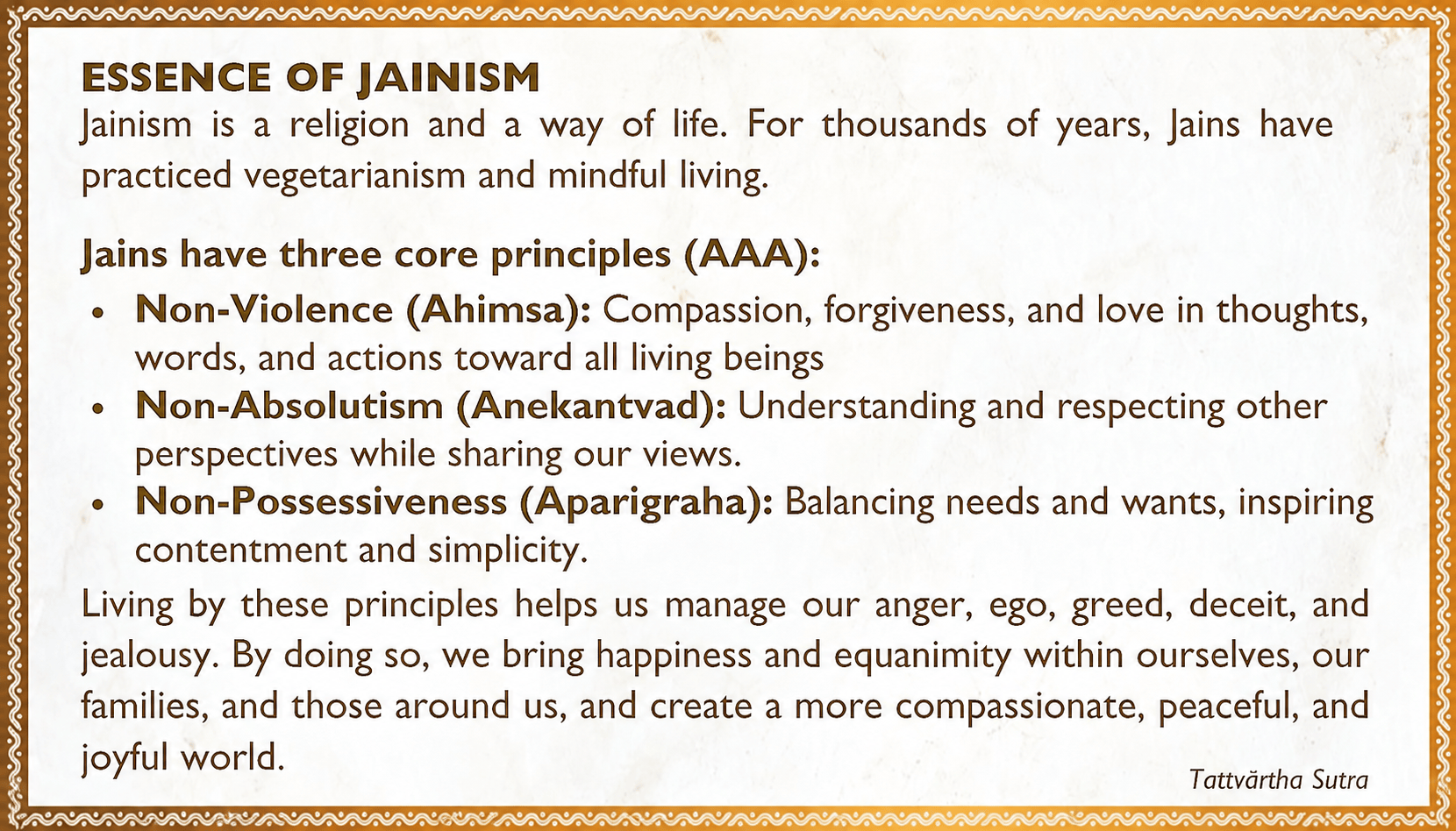
Jainism is a religion that embraces non-violence, open-mindedness, and contentment. Jains are vegetarians, practice mindfulness, and respect all living beings
◆ EVERYDAY LIFE ◆
We know the principles. But how to live them?

AHIMSA
Non-Violence
Compassion, forgiveness, and love in thoughts, words, and actions towards all living beings
Know more about Ahimsa →

ANEKANTVADA
Understanding and respecting other perspectives while sharing our views
Know more about Anekantvada →

Aparigraha
Non-Possessiveness
Balancing needs and wants, inspiring contentment and simplicity
Know more about Aprarigraha →
◆ The Tagline◆
Four words, read closely
Read in the context of Parsparopaghro Jivan — all souls render service to each other.
Live
Be awake, self-aware, mindful, kind’ LIVE ethically and with kindness through - 3 core principles Ahimsa, Anekantvad, and Aparigraha;
Live in a way that uplift others; we are interwoven, what I consume, how I speak, how I treat others - has ripple effect.
Let
Is LETTING go; not exploiting; respectful detachment
I don’t need to control, I need to uplift.
Let Live
Reverence for all life;
Autonomy and dignity of every being to live according to its own nature
Steward of life; responsibility and privilege nurturing others and bringing joy for all beings.
Live and Let Live
Deep roots in Jain tradition
Mutual respect; personal freedom
Every Soul is both a giver and a receiver.
◆ Questions ◆
Common Questions
1. What is Jainism, in simple terms?
Think of Jainism less as a religion built around belief in one all-powerful God, and more as one of the world's oldest practical philosophies for ethical living. At its core are three simple ideas: don't cause harm, stay open to other people's perspectives, and don't let your wants run your life. Practiced consistently, these three ideas — known as the "Triple A" (AAA) — shape everything from how Jains eat, to how they handle conflict, to how they treat the planet.
2. Who are Jains, and where does Jainism come from?
Jainism traces back more than 2,500 years in India, with its most recent great teacher, Mahavira, living around the same era as the Buddha. Today there are an estimated 4–5 million Jains worldwide, with growing communities across the US, UK, and beyond — many of them your neighbors, classmates, and coworkers, quietly living by these values every day.
3. What are the core values Jains try to live by?
Everything comes back to three principles, the AAA:
- Ahimsa (Non-Violence) — compassion in thought, word, and action toward all living beings
- Anekantvad (Non-Absolutism) — respecting that other people see the world differently, and no one has the full picture
- Aparigraha (Non-Possessiveness) — keeping your wants in check so they don't own you
Together, they're less a rulebook and more a daily practice.
4. What is Non-Violence (Ahimsa), and how do Jains practice it in everyday life?
Ahimsa is usually translated as "non-violence," but it's really about minimizing harm in everything you do — what you eat, how you speak, how you treat people (and animals) who frustrate you. In practice: a vegetarian diet, choosing words carefully in an argument, and thinking twice before buying something made in a way that hurts people, animals, or the planet.
5. Why are Jains vegetarian?
If Ahimsa means minimizing harm to living beings, diet is one of the most direct daily choices you have. Most Jains are vegetarian, and a growing number are vegan, for exactly that reason — every meal becomes a small act of non-violence. It's not about being perfect; it's about being conscious of the choice.
6. What is Non-Absolutism (Anekantvad), and why does it matter?
Anekantvad is the idea that truth has many sides, and no one person — including you — has the full picture. It's the philosophical root of intellectual humility: approaching disagreements assuming the other person holds a piece of truth you might be missing, instead of assuming you're simply right and they're simply wrong. In a moment when so much public conversation is polarized, it's arguably one of Jainism's most relevant ideas for modern life.
7. What is Non-Possessiveness (Aparigraha)?
Aparigraha is about not letting your wants — for money, possessions, status, control — run your life. It isn't a vow of poverty; it's a daily practice of asking "how much is actually enough?" and choosing contentment over the constant chase for more. Many people recognize a version of this in minimalism or the sustainability movement — Jainism has been teaching it for over two thousand years.
8. How does Jainism compare to other religions?
One of the biggest differences: Jainism doesn't center on a single God who created the universe or who rewards and punishes people. Instead, it teaches that every person is responsible for their own choices and their own growth — the emphasis is on what you do, not on divine intervention. In that sense, it has more in common with a practical ethical philosophy than with religions built around worship of a creator. That said, Jainism shares real common ground with other faiths — a deep respect for life, a call to compassion, and a belief that how you live matters.
9. How is Jainism different from Buddhism?
Jainism and Buddhism both arose in ancient India around the same era — roughly 2,500 years ago — and share real common ground, including a deep emphasis on non-violence and compassion. Jain tradition holds that the Buddha spent time training among ascetics practicing Jain-style austerities, including extreme fasting, before concluding that path was too difficult to sustain — leading him to develop the "Middle Way" instead of the stricter ascetic discipline Jain monastics follow to this day.
A clear difference shows up in diet: every Jain monastic tradition requires strict vegetarianism, while Buddhist practice varies by school and region — some Buddhist communities permit meat, since it isn't a universal precept the way it is in Jainism. And where Buddhism centers on the Four Noble Truths and Eightfold Path, Jainism organizes daily life around the AAA — Ahimsa (Non-Violence), Anekantvad (Non-Absolutism), and Aparigraha (Non-Possessiveness) — as a practical compass for everyday decisions.
10. Do I have to be Jain to live by these values?
Not at all. The AAA principles were designed as universal, practical values — you don't need to convert to anything, attend any specific place of worship, or adopt any label to start practicing non-violence, open-mindedness, and non-possessiveness in your own life. Many non-Jains already live by pieces of this without calling it Jainism.
11. I'm Christian (or another faith) — what would it look like to bring Jain Way of Life into my life?
You don't have to choose between your faith and these practices — they layer on top of, rather than replace, what you already believe. Diet is usually the hardest place to start, so start small: pick one day a week to go meat-, fish-, egg-, and dairy-free, and build from there at your own pace. Many people work up to fully plant-based over months, not overnight. Alongside that, look for small daily moments to practice the AAA: a kinder word in a hard conversation (Ahimsa), genuinely hearing out someone you disagree with (Anekantvad), and pausing before an unnecessary purchase (Aparigraha). Small, consistent shifts matter more than a perfect overnight change.
12. What does "Live and Let Live" actually mean?
It's the plain-English version of the AAA: live consciously and ethically yourself, and let every other living being — people, animals, the planet — do the same, undisturbed by your choices. It shows up in everyday decisions: the food on your plate, the products you buy, and how much space (literal and figurative) you take up in other people's lives.
13. Is there a Jain meditation practice?
Yes — Jain meditation centers on quieting the mind, mindful breathing, and a short daily reflection on where you fell short of the AAA that day, and where you lived up to it. It only takes five to ten minutes, morning or night, and it's a great low-effort way to start. [Watch/try the guided JWOL meditation ]
14. Jains in the world — who are we, by the numbers?
Jains are a small global community — well under 1% of India's population — yet the numbers around them are striking: Jains have India's highest literacy rate of any religious group, at 94.1%, and are widely cited as contributing a disproportionate share of India's income tax, commonly reported at around 24%, despite their tiny population size. It's a community that punches far above its weight, in both education and impact.
15. How can I learn more about Jainism or Jain Way of Life?
This FAQ only scratches the surface. Jain Way of Life (JWOL) — the book and this website — was built to make these ideas practical for modern life, wherever you're starting from. [Explore the Book] · [Take the Self-Assessment] ·
◆ Go Further ◆
Resources
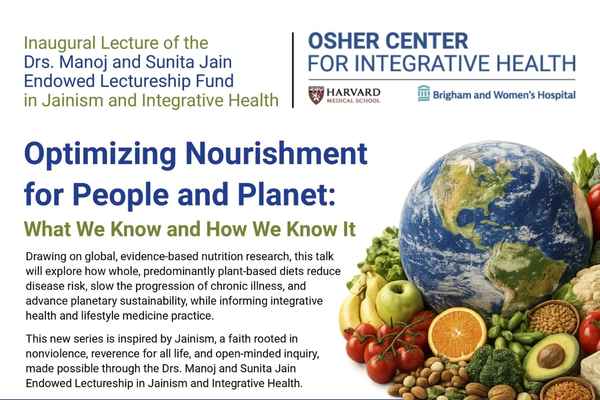
Lecture
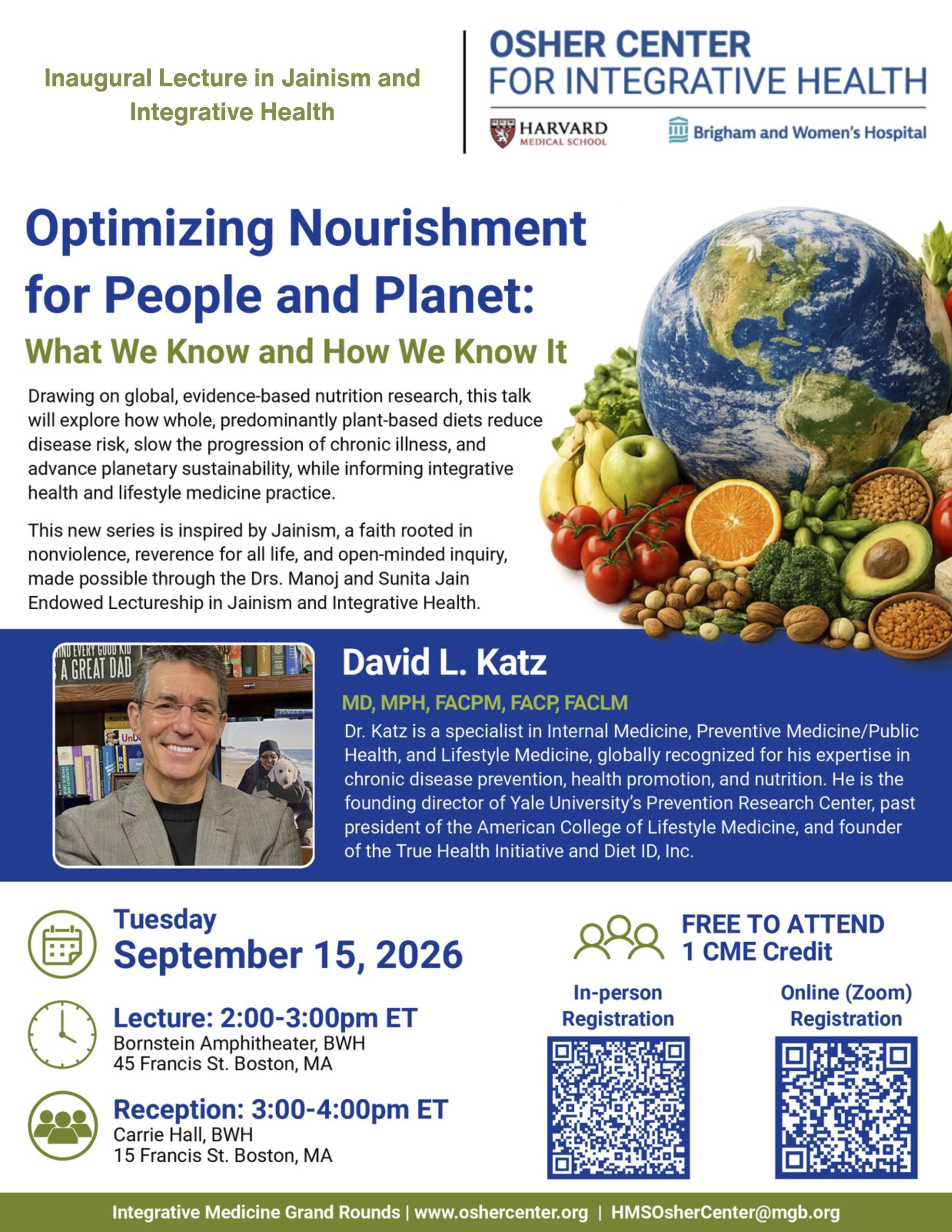
Harvard Lectureship
The Endowed Lectureship in Jainism and Integrative Health, and the talks it has brought to Boston.

Book
Jain Way of Life
A practical guide to compassionate, healthy and happy living. Written for Jains and non-Jains alike.

Book
Jain Path
How anger, hatred and deceit can be transformed into forgiveness, understanding and straight-forwardness.

Primer
About Jainism
Where the tradition comes from, what Jains practice, and how the three principles fit together.